Practical Troubleshooting Guide for Optimizing Your Production Line.
Reliable material handling is the backbone of your factory’s efficiency, a small conveying problem can result in production downtime, product loss, higher operating costs, and unexpected maintenance. However, even the most robustly designed systems can encounter operational challenges. When problems arise, the key is not just a quick fix—it is identifying the root cause to ensure your production line stays up and running.
At Mactex, we approach troubleshooting as a practical process optimization. Whether you are operating a food processing line in Shah Alam, a pharmaceutical plant in Klang, a plastics manufacturing facility in Johor, or a heavy industrial plant in Pengerang, identifying and resolving these common bottlenecks is the first step toward improving your bottom line.
1. Pipe Blockage (Line Plugging)
Pipe blockage is the most frequent and costly failure in bulk handling. It often happens when the air speed inside the pipe drops too low, causing material to settle and build up until the line is completely clogged.
Common causes:
- Overloading the System: Feeding material too quickly can overwhelm the system’s air capacity, causing the flow to stall.
- Moisture Ingress (The Tropical Factor): In Malaysia’s high-humidity environment, moisture-sensitive materials (like sugar or powders) absorb moisture from the conveying air. This makes the powder sticky, leading to material build-up on pipe walls and eventual blockages.
- Poor Pipe Routing: Excessive bends, sharp elbows, or unnecessary vertical lifts increase pressure loss and encourage material settling.
Engineering Solution:
- Stepped Piping Design: To maintain consistent velocity, Mactex implements stepped pipe diameters. This design ensures that the velocity remains at the ideal speed without reaching destructive high speeds.
- Integrated Dehumidification: We utilize desiccant air dryers to ensure the conveying air’s dew point remains very low, preventing your materials from becoming sticky.
- Optimised Pipeline Layout: Mactex designs conveying routes with suitable bend radius, pipe orientation, and equivalent conveying length to maintain stable material flow while minimizing blockage risk.
2. Material Degradation
For the food and pharmaceutical sectors, maintaining product quality is the primary objective. Material degradation—or “fines” generation—occurs when the product is handled too roughly, causing it to break or crumble.
Common causes:
- Excessive Velocity: Running the system at speeds higher than necessary can break down fragile granules like milk powder or instant coffee.
- Short-Radius Bends: Standard elbows create hard impact points where particles crash into the wall, leading to breakage.
- Incorrect Conveying Phase: Using dilute phase conveying for fragile products may result in unnecessary particle breakage and excessive fine generation.
Engineering Solution:
- Transition to Dense Phase: By shifting to a low-velocity, high-pressure Dense Phase system, Mactex reduces particle speed to less than 8m/s. This drastically lowers the impact energy, preserving the quality and texture of your product.
- Long-Radius & Wear-resistant Bends: We utilize elbows with a radius of 10D or greater, or specialized “Vortex” bends, which allow a cushion of air to protect the pipe wall and the product from direct impact.
- Proper Conveying Phase Selection: Mactex evaluates each material individually to determine whether dilute phase or dense phase conveying provides the best balance between product protection, conveying efficiency, and operating cost.
3. Dust Leakage and Environmental Contamination
Dust leakage is not merely an aesthetic issue; it is a violation of safety protocols and a significant explosion risk in plants handling combustible dust (e.g., flour, sugar, or chemicals).
Common causes:
- Positive Pressure Leakage: In pressure systems, even microscopic gaps in gaskets or couplings allow fine particulates to escape.
- Filter Receiver “Clogging”: If the filter sizing is incorrect, the filters in the dust collector become saturated. This restricts airflow, forcing dust through seals or causing the system to trigger pressure alarms.
- Worn Seals and Gaskets: Ageing seals, flexible connectors, and flange joints may gradually allow fine dust to escape into the surrounding environment.
Engineering Solution:
- Vacuum (Negative Pressure) Configuration: For toxic or ultra-fine powders, Mactex recommends vacuum conveying. Since the system pressure is lower than atmospheric pressure, any leak results in air being sucked inward, ensuring zero dust escapes into your factory.
- Automated Pulse-Jet Cleaning: We integrate smart sensors that trigger filter cleaning cycles based on real-time pressure readings, ensuring the filters remain clear for maximum efficiency.
- Preventive Inspection Program: Regular inspection and replacement of seals, flexible connectors, and gaskets help maintain system integrity and minimize dust leakage.
4. High Energy Consumption
High energy consumption is often a symptom of an over-engineered or poorly maintained system.
Common causes:
- Oversized Blowers: Using a blower that provides 30% more air than required provides unnecessary turbulence, wear, and high electricity bills.
- Air Leakage: Small leaks in the system can cost thousands in annual energy expenditure.
- Incorrect System Sizing: An improperly engineered system may require excessive airflow or pressure to compensate for poor design, resulting in unnecessary energy consumption.
Engineering Solution:
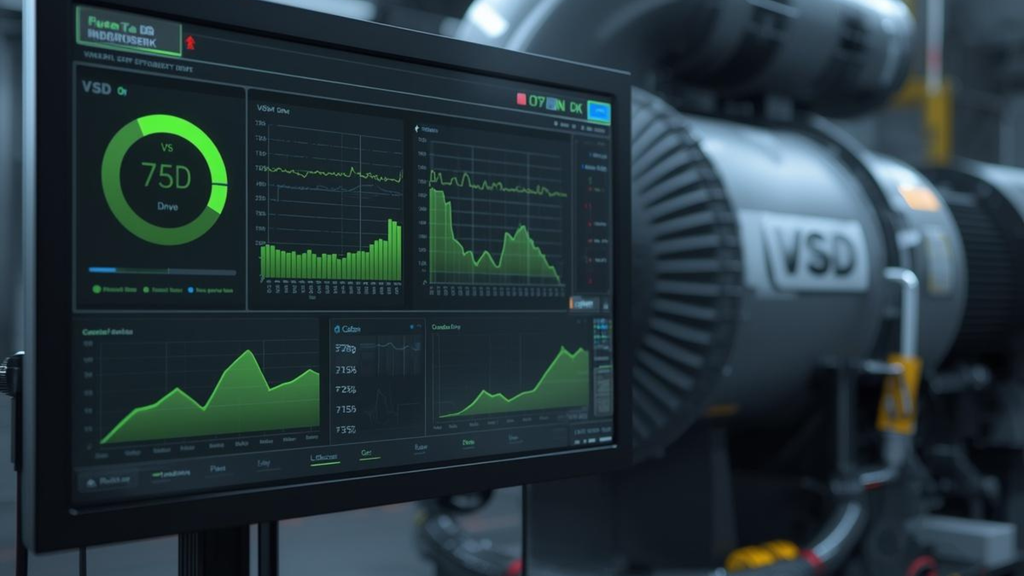
- Variable Speed Drives (VSD): Mactex integrates VSDs on prime movers (blowers/compressors). This allows the system to ramp up only when material is present and scale down during idle periods, significantly lowering your energy costs.
- System Curve Matching: We perform a rigorous audit to match the blower’s performance capacity to the actual system resistance, ensuring the motor operates at its peak efficiency point.
- System Performance Evaluation: Mactex reviews the complete conveying system – including blower selection, pipe sizing, conveying velocity, and operating conditions – to optimize energy efficiency while maintaining reliable material transfer.
5. The Engineering Troubleshooting Checklist
When a system underperforms, Mactex engineers follow this diagnostic protocol:
| Symptom | Primary Check | Secondary Check |
| Rising Line Pressure | Check for feed rate surge or filter blinding. | Inspect for humidity-induced scaling. |
| Material Breakage | Verify air velocity. | Inspect bend radii and impact zones. |
| High Energy Consumption | Check blower loading. | Check air leakage. |
| Frequent Blockage | Check conveying velocity. | Check humidity. |
| Poor Throughput | Check feed rate. | Check blower sizing. |
| Dust in Factory Air | Check filter bag integrity and seals. | Verify vacuum levels. |
| Surging / Pulsation | Inspect rotary valve air-leakage. | Check for erratic material feeding. |
6. Case Study: Remediation of an F&B Line in Malaysia
The Problem: A client in the cocoa processing industry was experiencing weekly line blockages and 12% product waste due to fines. The existing system was an imported “off-the-shelf” dilute phase unit.
The Mactex Diagnosis: The high ambient humidity in Malaysia was causing the cocoa powder to adhere to the pipe walls. Furthermore, the fixed-speed blower was delivering excessive velocity for the given throughput.
The Solution:
1. Climate Control: Integrated a refrigerant air dryer to stabilize the conveying air.
2. System Upgrade: Retrofitted the system to a Dense Phase conveying system using a pressure vessel.
3. Automation: Installed a PLC-based “Unblock” logic that detects pressure spikes and automatically clears the line.
The Result: Blockages were eliminated significantly, and product degradation dropped from 12% to less than 1.5%. The ROI was achieved within 14 months through material savings alone.
Conclusion: Turning Problems into Performance
Most pneumatic conveying issues can be traced back to a few key variables. Whether it’s air speed or humidity-induced clumping. Most pneumatic conveying problems are symptoms of an underlying engineering issue rather than equipment failure. Identifying the true root cause is essential to improving reliability, reducing maintenance cost, and protecting product quality.
Choosing a partner like Mactex means choosing a “Turnkey” philosophy where the system is designed as a single, cohesive unit. We don’t just supply parts; we supply process stability.
Is your system underperforming? Don’t wait for a total line collapse.
Request a Pneumatic Conveying System Health Check Today
Mactex Sdn Bhd
Solving Complex Bulk Handling Challenges Across Malaysia.
Frequently Asked Questions (FAQ)
1. What is the most common problem in a pneumatic conveying system?
Pipe blockage is one of the most common issues. It is often caused by incorrect conveying velocity, excessive feed rate, moisture absorption, or unsuitable pipe routing. Identifying the root cause is essential before selecting the appropriate solution.
2. Why does my pneumatic conveying system keep blocking?
Frequent blockages may result from poor airflow balance, humidity, material buildup, excessive bends, or conveying conditions that are not suitable for the product being handled. A complete engineering evaluation is usually required to determine the actual cause.
3. Why is my product breaking during pneumatic conveying?
Fragile products such as milk powder, coffee, tea leaves, snack ingredients, and pharmaceutical granules may break if the conveying velocity is too high or if the system uses unsuitable bends or the wrong conveying phase.
4. How can I reduce dust leakage in my factory?
Dust leakage can be minimized through proper system sealing, correctly sized filtration systems, regular maintenance of seals and gaskets, and selecting the appropriate pressure or vacuum conveying system for the application.
5. Why is my pneumatic conveying system using so much electricity?
High energy consumption is commonly caused by oversized blowers, excessive conveying velocity, air leakage, or an inefficient system design. Optimizing the overall conveying system can significantly reduce operating costs.
6. Should I choose dense phase or dilute phase conveying?
The choice depends on your material characteristics, conveying distance, throughput, and product sensitivity. Dense phase conveying is generally preferred for fragile or abrasive materials, while dilute phase conveying is suitable for many free-flowing products where higher conveying speed is acceptable.
7. Can an existing pneumatic conveying system be upgraded instead of replaced?
Yes. Many existing systems can be improved through engineering modifications such as optimizing conveying velocity, upgrading blowers, improving filtration, modifying pipe routing, or converting from dilute phase to dense phase conveying, depending on the application.
8. How often should a pneumatic conveying system be inspected?
Routine inspections should be carried out according to operating conditions. Critical components such as blowers, rotary valves, filters, seals, flexible connectors, and pipelines should be checked regularly to maintain reliable performance and reduce unexpected downtime.
9. How do I know if my pneumatic conveying system needs an engineering review?
Common warning signs include recurring blockages, excessive product breakage, dust leakage, rising energy costs, unstable material flow, increasing maintenance frequency, or production expansion that exceeds the original system capacity.
10. Can Mactex evaluate my existing pneumatic conveying system?
Yes. Mactex provides engineering assessments to identify the root causes of conveying problems and recommend practical improvements based on your material characteristics, production requirements, factory layout, and operating environment.